
Shoulders Down
Hope is renewable fuel. Recovery is how you fill the tank.

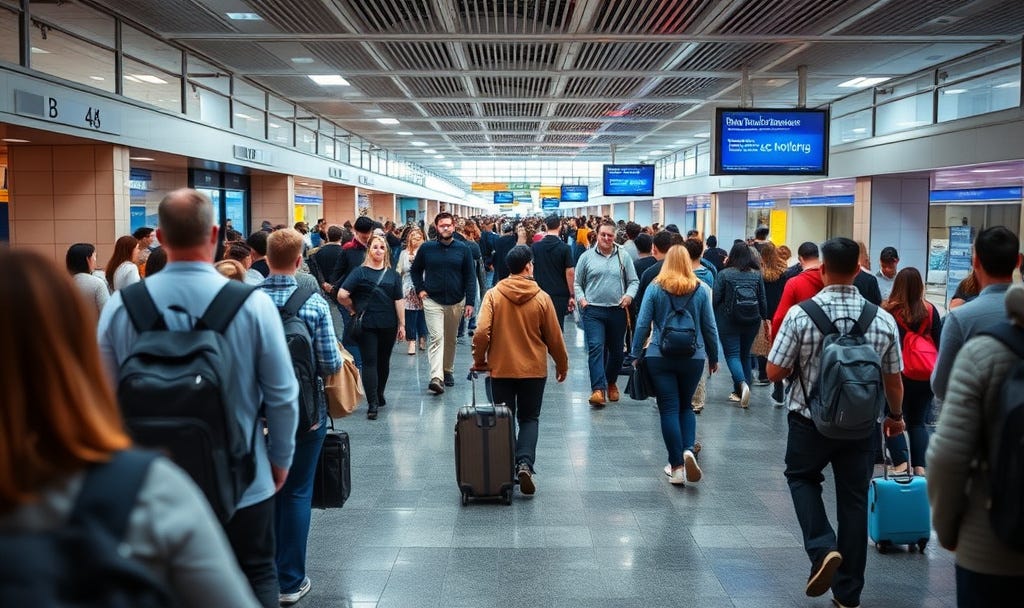
We stepped off the plane and felt it immediately.
Minnesota in winter keeps your body clenched without knowing it. Shoulders up, jaw tight, body contracted against the cold. You don’t notice it until it’s gone. That day, warm and humid air hit us, and immediately something changed in our bodies. Debby noticed it. I noticed it. We looked at each other and didn’t need to say much.
Shoulders down.
That moment, that physical release of tension we’d been carrying for months, was the first sign that macro recovery was doing what it’s supposed to do. Not just rest. Renewal.
The harness was the second sign.
There is a theme park ride I tried to go on a few years ago with my family. The last time, the safety harness wouldn’t close. That was embarrassing enough to matter: a quiet, humbling moment that said clearly where I was and how far I had to go.
This time, the safety harness snapped shut with room to spare.
Nobody announced it. No one was keeping score. But I knew what that gap represented: months of early mornings, deliberate choices, and a practice built one boring win at a time. The harness was the receipt.
Two receipts in the same week. Both earned. Neither planned.
That is what recovery is all about.
The Question That Changes Everything
Dr. Michael Gervais, in a recent Finding Mastery newsletter, reframes recovery with a single question: don’t ask, “How do I do less?” Ask instead, “What does my system need right now?”
That reframe changes everything. The first question treats recovery as subtraction, time away from the practice, a temporary retreat. The second question treats recovery as its own discipline, something to be designed, intentional, and practiced with the same care as the work itself.
Recovery is not permission to stop. It is self-discipline applied to renewal.
There Is No Off-Season
Gervais makes the case clearly: there is no off-season. Only seasons of emphasis.
The practice doesn’t stop during recovery. The emphasis shifts. Less load. More restoration. Different skills. Same intent. Elite performers understand this intuitively. They don’t step out of the game. They change how they move inside it.
Sam Darnold won the Super Bowl and was back working with a personal coach four days later. Not the full team. Not forced hustle. A quiet, steady recommitment: intentional about what the in-season training didn’t cover, careful about building what next season will need.
That is the boring-win-at-a-time principle applied at the highest level of the game.
The hope practice works the same way. You don’t take an off-season from hope. The effort changes shape, and the commitment doesn’t.
Two Kinds of Recovery
It has been my experience that recovery operates at two levels. The practice needs both.
Mini recovery lives inside the practice itself. Rest days between strength sessions. Sleep as a non-negotiable. The no-phone morning that protects the first quiet moments of the day. Even the interval training, heart rate up then back down, is a mini recovery built inside the workout. The body adapts during recovery, not during the effort. The retrospective that says “rest today” is not weakness. It is the practice being smart about itself.
Macro recovery is the bigger, intentional break. A week away from the news cycle. No work contact. Space to breathe. Deep connection with the people in your Pictures: not preparing for the future, but living it, right now, together.
Both are essential. Mini recovery keeps the engine running. Macro recovery rebuilds it. You cannot sustain the practice on mini recovery alone. Eventually, the deeper reserves run dry. And macro recovery without the daily habits underneath it does not hold either.
Recovery is self-discipline applied to renewal. It is what keeps the hope practice strong enough to meet adversity when the next hard thing arrives. You don’t recover so you can rest. You recover so you can meet the next adversity.
Planning Recovery Is Also the Practice
Part of what made this particular week work was designing the next chapter, not just living the current one.
Planning future recovery is itself an important aspect of a hope practice. Creating a vivid, specific future that makes the present investment feel worthwhile. The more real and specific the future feels, the more it shapes present decisions. Recovery isn’t just reactive. You can design it before you need it.
That is self-discipline applied to renewal: intentional, forward-looking, and shared.
Not Preparing. Living.
Our week of renewal felt like what the practice really needed at that moment.
Neither of us felt our age. Shoulders down. Intentional play together. Two people who had shown up for themselves, showing up fully for each other.
Reminds me of Agile Best Self Principle 8: Prioritize being more over doing more. Recovery is the fullest expression of this principle. Choosing to be present, rested, and fully alive over doing more work is exactly what Principle 8 is all about.
You built this practice for the people in your Pictures. Macro recovery is where you actually get to be with them.
The Infinite Game Needs Renewal
Gervais connects recovery directly to Simon Sinek’s writing about the concept of the infinite game. Health, relationships, meaningful work: these are all infinite games. Infinite games have no finish line, no final winner, and an unlimited number of players. Continuing to play the game is the point of the infinite game.
Infinite games require renewal. The hope practice is an infinite game. Recovery is how it refuels itself.
Without recovery, the discipline becomes grinding and brittle. With it, the practice stays supple, sustainable, and genuinely alive.
Recovery isn’t time away from the work. It’s part of the work.
The Question to Take With You
Before the next hard morning. Before the week where life feels heavy. Before the moment when everything is asking something of you:
What does your system need right now?
Not how do you do less. Not how do you stop. What does this hope practice, this body, this mind, this relationship, this hope, need to keep going?
Answer that question. Then build it in.
Replenish the practice. Adversity will come again. Recovery is how you meet it.
Step off the plane. Feel the shoulders drop. That's the hope practice at work.
Copyright © 2026 Brian Hackerson